Tag Archives: Italy

What to See in Pisa Besides the Leaning Tower

Pisa What to See in Pisa Besides the Leaning Tower

River Arno – Pisa. CC Image by Neil Howard (Flickr).

Pisa, in northern Tuscany, is most famous for its leaning tower, but there is plenty more to attract visitors to this beautiful Italian city.

As with most cities in Italy, the city of Pisa is steeped in history. It is one of four great medieval maritime republics and there is still a connection with that time in the annual Regatta of the Ancient Maritime Republics, which is held in Pisa once every four years. The other three years it’s held in Venice, Genoa or Amalfi (the other three maritime republics). The boat race and the parade of the participants in their medieval costumes is truly a sight to behold.

Another event that draws many tourists to visit Pisa is the Gioco del Ponte. This is the bridge game, and it’s a reconstruction of a medieval competition between the city inhabitants from the north and south of the Arno River. As with the Regatta, the event begins with a parade in costume. The actual contest is when two teams of 20 people try to push a big cart over the middle of the bridge into the other team’s area – a kind of twist on a tug of war.

For sightseeing, the area around the Cathedral of Saint Mary of the Assumption is picturesque and there are several museums to visit. Of course, no trip to Pisa would be complete without going to have your photograph taken at the leaning tower, and you can also climb the 294 steps inside the tower if you’re feeling ambitious. You get a great view of the cityscape from the top.

As Pisa is a university town, it has quite a lively nightlife, and you can find plenty of bars to spend the evening in. The Arno Promenade alongside the river is a great place to see the Pisans take their passegiata – a stroll at the end of the afternoon.

You might choose to stay in the city itself or a little further outside in the countryside. There are plenty of hotels to choose from, but you can also find bed and breakfast and holiday villas to rent in the city and surrounding area.

Pisa Italy holidays can be a perfect combination of culture and sightseeing, great food and with easy access to the beautiful Tuscan countryside. If you hire a car, you can easily travel to other towns in Tuscany such as Florence and Siena, as well as to the spectacular coastline of the Cinque Terre, a protected area of natural beauty.

With so much art and culture on display in Pisa, like many other Italian cities, it’s challenging to see everything in one trip. A great excuse to return.

Joanna is a freelance travel writer who lives in Nice. She enjoys frequent trips to Italy with her family to explore the beautiful Italian countryside and its cities.

Barbara Conellli’s Chique Secrets of Dolce Amore

Chique Secrets of Dolce Amore Barbara Conelllis Chique Secrets of Dolce Amore As a traveler with a longing to realize my childhood dream of visiting Italy, it is with anticipation I begin to read “Chique Secrets of Dolce Amore” by bestselling author and travel writer Barbara Conelli.

Divided into 15 equally enchanting chapters, her book tells tales of unexpected meetings, magical moments and love in Milan.

For Ms. Conelli, love doesn’t require lavishness or grand gestures. To her, it means something else; simple pleasures, new discoveries, little things, and much more.

In Milan, love can surround you everywhere. You just need to know where and how to look.

With grace and elegance, Ms. Conelli shares the city’s special spots, only known by locals and passionate lovers of Milan. Her unique way of capturing the magic of places and people she writes about is ever present, guiding you through Milan – by morning, day or night. Every part of the book brings a different perspective to the essence of love.

Mariella taught me that when the streets of Milan ask you to dance, there’s nothing else to do but put on your ballet shoes and surrender with confidence to the arms of the city that has materialized the visions of courageous, fearless people.

You will see Milan from a new angle rarely discovered by tourists, learn the origin to Pizza Margherita, shop for exclusive fashion in the Golden Quadrangle, find out where to go for a divine snack of crispy panzerotto (and where to savor it), come along on a romantic evening tram adventure, experience the sublime nature of ballet, and dine at an extravagant restaurant whose entire interior is for sale (because the owner believes “…every space must evolve and grow so that life energy can flow through it continuously…”).

It is as if you follow the author every step of the journey and you feel an unavoidable desire to walk the streets of Milan on location, not only through your imagination.

In Milan, there are very few things you can rely on. Life here is fast and loves constant changes.

The final chapter and Ms. Conneli’s unforeseen encounter with an American outside Tiffany’s, as taken out of a Hollywood movie, excellently summarizes what dolce amore is really about.

As part of her virtual book tour, Barbara Conelli is with us today to answer a few questions relating to her new book:

1. What inspired you to write “Chique Secrets of Dolce Amore”?  

Italy is my eternal inspiration. After ”Chique Secrets of Dolce Vita” that indulged in the Italian sweet life, I wanted to write a book that would show how much there is to love about Italy, and how much there is to love about our life. My intention was to take my readers on a magical journey around the most charming places of Milan and let them experience the same sensations I feel when I’m in my beloved city.

2. Which is your favorite aspect of Milan and the Italian lifestyle?  

It’s definitely the joy of life. The ability to truly live in the present moment and see the real beauty of life, rejoice in the little everyday things that matter so much – friends, delicious food, sunshine, laughter… We often think that happiness must be grandiose, yet it’s so ridiculously simple. Italy really helps you realize that life is a gift, with the good and the less good, and it’s to be appreciated and savored.

3. If only one thing, what are you hoping readers will garner from the book?  

A little bit of sweetness, a pinch of romance, a touch of dreaming, a hint of bliss, a whisper of passion. That’s what Italy is about, every single day.

Why Visit Genoa?

Genoa Why Visit Genoa?

Genoa, Italy. CC Image by Jim Monk (Flickr).

By BLUMENRIVIERA

Genoa is the capital of Liguria and holds the nickname of ‘La Superba’ (the Superb one) due to its impressive past. Its legacy still lives on as it became a 2004 European Capital of Culture and its old town was declared a UNESCO World Heritage Site in 2006.

So what makes Italy’s largest seaport city so interesting? It has a rich history as the birthplace of Christopher Columbus, as well as impressive art and music during the Renaissance. Genoa features many different aspects of Italy that visitors will enjoy – a beautiful piazza, a royal palace, churches filled with Renaissance art as well as the walls and fortresses that formerly protected the city. Genoa has been described as being ‘typically Italian’ – with hot and sunny summers, typical Mediterranean style houses and an al fresco dining and drinking experience. However, it lacks the heaving tourism experienced in the cities of Rome, Venice and Florence, which makes the city even more appealing.

There are an abundance of museums worth visiting in Genoa which show off the city and its rich history. The largest European collection of Oriental art can be found at the Chiossone Museum of Oriental Art, whilst modern art can be discovered at Wolfsoniana. A former convent has now been converted into the Museum of St. Augustine, which features numerous medieval pieces of art.

Modern day Genoa offers fabulous boutiques for those wanting to splash their cash. The old harbour has been renovated into a pleasant marina and promenade with many choices of restaurants and cafes, where you can sample some typical mouth-watering Genovese food. Pesto originates from the Ligurian region and the best pasta alla Genovese can be had here. A unique staple from the region to try out is pansotti, a triangular ravioli filled with ricotta and chard. One cannot go wrong with sampling some authentic Italian focaccia which works well as a snack on the go whilst sightseeing.

With its historical background, its reputation as a bit off the beaten track and a real slice of Italian life, it’s not a question of why visit Genoa, but why not?

Vanessa wrote this post on behalf holiday home specialist BlumenRiviera.Visit their website at http://www.blumenriviera.co.uk/

A Mediterranean Solo Cruise Through the Italian Riviera

Vernazza A Mediterranean Solo Cruise Through the Italian Riviera

Seaside port of Vernazza, Cinque Terre, Italy.

The Lay of the Land

‘Il dolce far niente’ is an Italian phrase that means the sweet art of idleness. It is also a spot-on and colourful phrase that best describes a ten-day cruise in the Mediterranean through the Italian Riviera. Liguria is the official name of this thin crescent of Italian coastline, but to tourists and cruisers it is more commonly referred to as the Italian Riviera. Genoa is the largest city in the region. The Riviera di Ponente lies to the west, and the Riviera di Levante lies to the east. This dramatic and breath-taking coastline is filled with tiny bays and inlets, pastel-hued resort towns and quaint fishing villages. Everything is set amongst dramatic cliffs and bathed in lemony sunlight. There is a reason why the Italians call this place the Riviera of the Rising Sun.

Sailing Solo

This is my first solo cruise, booked at the last minute. While cruises have always catered to honeymooning couples, families and retirees, the cruise lines have gone a long way to make themselves more attractive to singles. During those times when I felt like a fish out of water, I simply plugged into my iPad and took advantage of the satellite Wi-Fi. This is also how I have been conducting all of my research and planning shore excursions. If I want to learn about Genoa, Cinque Terre or the history of pesto, I simply fire-up the Apple. While most foodies would know that pesto was invented in Liguria, this was news to me.

Genoa A Mediterranean Solo Cruise Through the Italian Riviera

Old harbor of Genoa.

Two Days in Genoa

Genoa was our port of call for two days. The city is known throughout the world as being the birthplace of Christopher Columbus. During the 13th century, Genoa’s maritime power rivalled that of Venice. The historic district of Genoa is located on a strip of land between the mountains and the sea, so the best way to navigate the city is by foot. After doing some copious amounts of research, I compiled a list of must-see attractions. This is how I spent my two days in Genoa.

1. If you are an art enthusiast, then the Galleria Nazionale should be a top priority. It contains works by Luca Giordano, Guido Reni and Antonello da Messina.

2. Half the fun of the medieval centre of Genoa is getting lost in its tangled warren of cobbled streets. It is a hodgepodge of churches, 16th century homes and small shops selling everything from coffee to wine.

3. Genoa’s cemetery, which is called the Cimitero Monumentale di Staglieno, is one of the city’s most famous landmarks. It is a sprawling, open-air museum on the outskirts of town. It takes several hours to explore, so plan accordingly.

Photo: 1, 2

The Beauty of Italy: From the Alps to Amalfi

Before visiting Rome, consider Rome City Apartments to make the most of the Italian capital.

Dolomites The Beauty of Italy: From the Alps to Amalfi

View of the Dolomites in north-eastern Italy.

By NISHA BASHIR

Nature has graced Italy with a natural beauty, from its majestic snowcapped mountains to its exquisite white sand beaches, lush rolling hills and plains, and stunning sea vistas. Steeped in history and culture, from antiquity through the Middle Ages and the Renaissance to modern times, Italy is a country that is rife with unparalleled art and architectural masterpieces. Italy boasts forty-four world heritage sites, more than any other country in the world, twenty-three national parks, nearly five hundred nature preserves and over seventy-six hundred miles of shoreline hugging the peninsula and the islands.

As you travel through Italy, you’ll discover that each region has its own unique beauty, charm and culture. In the country’s northern regions lie the awesome mountain peaks of the Alps and the Dolomites interspersed with alpine valleys dotted with ancient castles. In this part of the country you’ll find breathtaking glacial lakes including the jewel-like Lake Como, surrounded by elegant villas, terraced gardens and picturesque towns. The cities of Bologna, Milan, Turin, Verona and Venice are all located in the north, the county’s most populous area. Considered by many to be the most beautiful city in the world, the floating city of Venice sits on a collection of one hundred and seventeen tiny islands in the Venetian Lagoon; its buildings are architectural wonders amid a network of waterways.

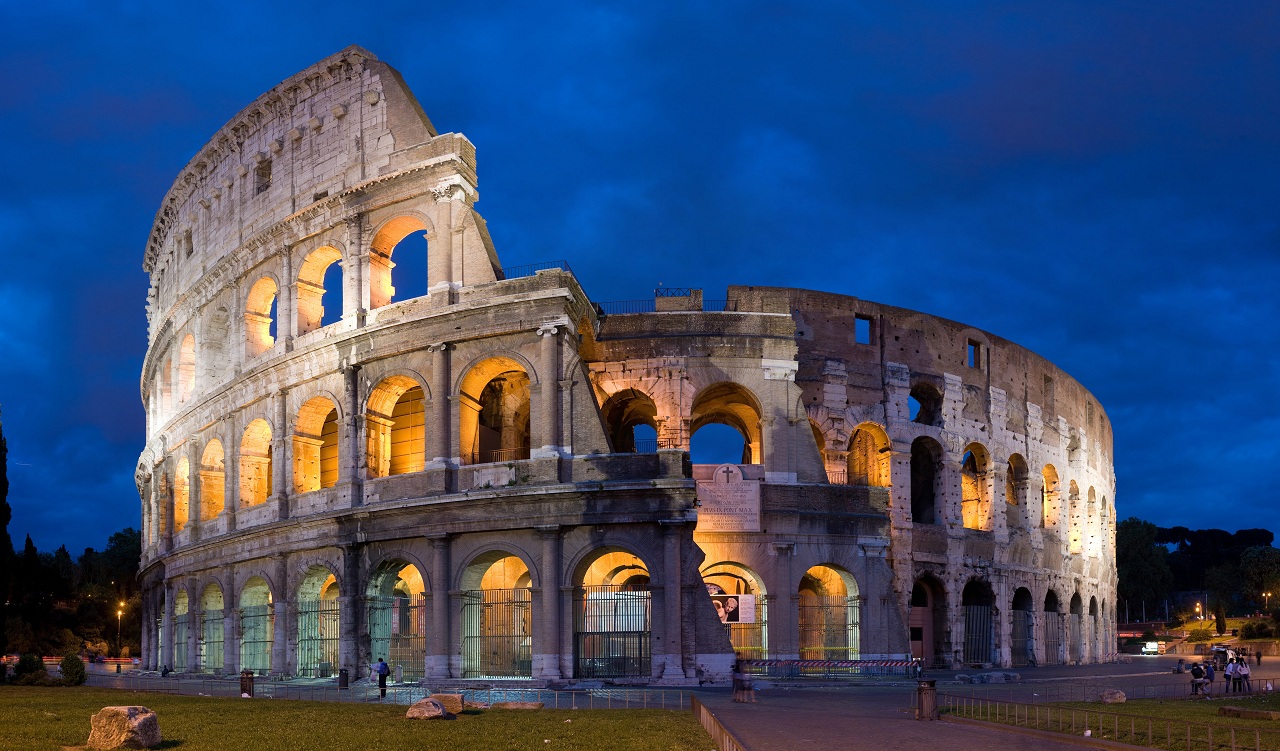
In Central Italy lies the region of Tuscany. With its fertile land, craggy, winding paths and terraced vineyards, it is the birthplace of the Italian Renaissance. It gave the world such great talents as Leonardo da Vinci, Michelangelo, Botticelli, Puccini, Galileo, and Dante. Tuscany’s walled city, Lucca, is a bastion of medieval charm which dates back to the dark ages. In the middle of the country you’ll also find the cities of Florence, Siena, Pisa, Lucca and Italy’s capital, Rome. In this area lie the majestic remnants of the great Roman Empire, which ruled much of the world for hundreds of years. With more than twenty-five hundred years of history, Rome is a treasure trove of historical sites; the Coliseum, the Parthenon and the Via Appia, where you can stroll along the road where the Roman armies marched two millennia ago. There are frescoes, paintings and statues everywhere, not in the least of which is Michelangelo’s masterpiece that adorns the ceiling of the Sistine Chapel in Vatican City.

Amalfi coast The Beauty of Italy: From the Alps to Amalfi

The Amalfi coast.

Southern Italy sports some of the country’s most beautiful beaches and the romantic Amalfi coast. Here you’ll find the Mt. Vesuvius, Italy’s active volcano along with the ruins of Pompeii, the city that lay buried under ash for fifteen centuries. The city of Naples, originally a Greek colony, has witnessed the rise and fall of many civilizations, evidence of which can be found in the city’s art and architecture. Off the coast, you’ll find many islands, the largest of which are Sardinia and Sicily.

Italy is a country of contrasts and spectacular beauty that charms all those lucky enough to visit and keeps them coming back time and time again.

Nisha Bashir works as the editor for Holiday365 and has been representing the business for the last two years now. Holiday365 offers some great deals in the UK, why not pay them a visit to see the latest deals, holiday365.co.uk.

Escape to Tuscany

tuscany hills Escape to Tuscany

World-renowned for its natural beauty, Mediterranean climate and rich cultural past, Tuscany on central Italy’s west coast is one of the countries most popular tourist regions. Tuscany holidays invite the traveller to a region which is considered in one breath with the Italian Renaissance and can boast of immense historical significance, particularly in the context of the arts and sciences. It enjoys enduring popularity with visitors who love culture during the day and traditional Tuscany accommodation at night.

Having been home to arguably the most famous collection of artistic and scientific talent the world has ever seen, including Michaelangelo, Botticelli, Dante, Leonardo Da Vinci and Galileo Galilei, when taking Tuscany holidays one can delight in a cultural experience that is second to none. The region’s immense cultural and artistic heritage is expressed in its countless churches, palaces, art galleries, museums, villages, piazzas and, of course, the unique Tuscany accommodation. On Tuscany holidays there is much to see in the main cities of Florence and Siena, but also in smaller surrounding villages such as San Gimignano.

Florence receives an average of 10 million visitors a year, making it one of the most visited cities in the world and a favourite amongst those on Tuscany holidays. Alongside the city’s historic centre, which has been designated a World Heritage Site, the region around Florence contains museums and art galleries housing some of the world’s most famous and valuable works of art. Such museums include; the Uffizi, which holds the best collection of Renaissance art in the world, including Botticelli’s Birth of Venus, the Pitti Palace and the Bargello. The museum also hosts entrancing street performers at night.

The original statue of David, Michelangelo’s unique masterpiece, is in the Galleria dell’Accademia delle Bella Arti in Florence. For those visitors who are more interested in science, the Institute and Museum of History of Science, located on the Piazza dei Giudici, contains 5,000 items from the Medici collection of apparatus and scientific instruments. When visiting Tuscany, accommodation in Florence is easy to arrange, with the city boasting great hotels and idyllic farmhouse properties found just outside in the rolling Tuscan landscape.

Many of Tuscany’s frescos, sculptures and paintings are also held in the region’s churches and cathedrals, concentrated in Florence, Siena and Pisa, which also boasts the infamous leaning tower and the Collegiata di San Gimignano. The small rural town of San Gimignano boasts a beautiful church square surrounded by ancient towers visible from miles away. When searching for Tuscany accommodation, one can stay in quaint old hotels or book a farmhouse or villa in the surrounding countryside. Tuscany is also famous for its outstanding wine, including the well-known region of Chianti along with nearby Montalcino and Montepulciano. When considering how to book Tuscany accommodation outside of the main cities, many visitors find renting rooms or properties in the countryside to be a great option and easily found online.

8 Sights to Visit in San Gimignano

Gimignano 8 Sights to Visit in San Gimignano

By VICTORIA IME

San Gimignano has very ancient origins. The city already existed in Etruscan times, a few centuries before Christ, and was called Velathri. In the following centuries the city was conquered by the Romans and then by the Lombards. But the heyday of San Gimignano was the Middle Ages. It was indeed located in a strategic position on the Via Francigena, which was the main way for travelling at the time. In this period the city reached its zenith, and the famous towers that today constitute the symbol of the city were built.

Recently, art treasures and the beauty of the city have been rediscovered, making it important enough to be recognized as World Heritage by UNESCO. To truly appreciate the city, consider these top sights:

A Walk Through the City

1. Piazza del Duomo

San Gimignano has over the centuries retained the ancient medieval structure. The main square, Piazza del Duomo, is overlooked by buildings of great architectural and artistic value such as the Duomo, the Twin Towers, the Palazzo del Podestà, the Tower “Rognosa” and the Town Hall. A short walk from Piazza Duomo is the Piazza della Cisterna, a square named after the octagonal well in travertine which is located in the centre of the square. In the Middle Ages, this square was the shopping and entertainment centre of the city and housed shops and taverns.

2. The Duomo or Collegiate Church of San Domenico
Built around 1100, this building contains so many works of art that it can be considered a proper museum. The church has three naves, decorated with frescoes of the Sienese and Florentine schools, with authors such as Benozzo Gozzoli, and adorned with precious statues and sculptures, including some of Jacopo della Quercia. In the Chapel of Santa Fina Domenico Ghirlandaio, a famous Florentine painter painted the “Comunicazione della morte” and the “Esequie di Santa Fina”.

3. The Towers of San Gimignano

In medieval times San Gimignano had over seventy towers of which today there remain only 15. The most important include the tower called “Rognosa” in the Palazzo del Podesta, the twin towers of Ardinghelli, and the tower “Grossa” in the Palazzo del Popolo. This is the highest tower in the city and offers a splendid panorama of the Elsa valley and the Apuan Alps to the mountains of Pistoia.

4. The Town Hall

Formerly the mayor housed the Town Hall. It now houses the civic museum and the art gallery, full of masterpieces by Pinturicchio, Benozzo Gozzoli, Pier Francesco Fiorentino, and many others. The Town Hall houses also the room containing the Majesty of Dante by Lippo Memmi.

5. The Rock of Montestaffoli
The Rock Montestaffoli was built on the hill Montestaffoli around 1350. The fortress was built with the same stone used for the walls and has an irregular trapezoid shape. The tip of the trapezoid is outside the walls and the still existing two square towers offer a wonderful landscape.

In the Surroundings

San Gimignano is a city completely surrounded by the countryside, planted with olive groves and vineyards and dotted with villages of ancient origin.

6. Castellina (in Chianti, 29 km)
Castellina, one of the most important villages of Chianti, is of medieval origin and famous for producing wine and oil.

7. Radda (in Chianti, 40 km)
Radda in Chianti is a medieval town that still retains its imposing walls. The village preserves the medieval layout with narrow alleyways.

8. Monteriggioni (25 km)
Monteriggioni is a castle that hasn’t changed over the centuries. Entering the main door means going back a thousand years. There is a large square overlooked by a little Romanesque church, a few houses, some artisan shops and restaurants. The second door of the castle is actually a vantage point among the finest in the area. Even this view is worth a visit.

Victoria Ime works for magicoftuscany.com, a travel site dedicated to holidays in Tuscany. She likes travelling around Italy and writing something about visited places at the end of each trip. Another great passion is reading travel tips by fellow travelers.

An Imaginary Trip to Sardinia: A Sensorial Experience

punta sarena gonnesa An Imaginary Trip to Sardinia: A Sensorial Experience

By GIULIA GARAU

Located in the heart of the Mediterranean Sea, Sardinia looks like a large footprint. Sardinian people are known for their proud and mistrustful nature, but also for their hospitality: guests are sacred, treated with great warmth and respect. Let me lead you to discover Sardinia in the simplest existing way: through our five senses. This is the best way to enjoy Sardinia in its totality. Just take a little time, relax and enjoy your reading!

Sight

Sardinia is one of the less populated Italian regions and preserves unique and pristine landscapes. The dunes of Piscinas, the Sardinian desert, are the highest in Europe (they reach up to 100 meters), and the wide Gennargentu Mountains offers the chance to visit unspoilt landscapes and to admire endemic animal species. Of course, a beautiful view is also done by the beaches and the sea, for which the Island has become popular all over the world.

Hearing

The music plays an important role in Sardinian culture. You can hear the folk music in every town festival, accompanied by the typical popular dances; very popular is the Cantu a Tenore, which has been classed among intangible world heritage by Unesco. The typical instrument which usually accompanies the dances is the Launeddas, consisting in three pipes and played using circular breathing.

Touch

When I’m lying on the beach, I like the sand slipping through my fingers. In Sardinia there are both rocky hidden coves and large sandy beaches. Some beaches are very appreciated because of the whiteness and thinness of the sand, which is like flour. You can find them for example in Siniscola (Nuoro), Lido di Orrì (Ogliastra), Su Giudeu (Cagliari). Another beach I like is Is Arenas, in Oristano area, called the grains of rice beach thanks to the small grains of coloured quartz.

Smell

What strikes the most are the smells of the vegetation, which you can smell everywhere, in large part characterized by the Mediterranean maquis: holm oaks, cork oaks, juniper trees as well as strawberry trees, myrte, cistus. Typical of rocky territories are also helichrysum and broom, while in non-rocky territories you can frequently see cistus, rosemary and mastic trees. The symbol flower of Sardinia is the wild peony.

Taste

The forced isolation over the centuries, due to the geographic position, enabled to preserve the ancient gastronomic traditions by using fresh and genuine products. Sardinian people use darum weath semolina to produce many varieties of pasta and bread, like the famous Malloreddus (typical pasta), Pane Carasau (typical thin bread). Starters are very important in Sardinian culinary culture, so people often open the meal with olives or a tasty piece of matured cheese. There is a large variety of sweets and cookies, many of them prepared with almonds; another common ingredient is the Sapa (cooked grape must syrup). The meals are accompanied by a large variety of regional wines, resulting from an ancient wine tradition (Cannonau, Vermentino, Nepente), and by very appreciated liquors (like Mirto — myrte liquor).

Giulia Garau works for Charming Sardinia Luxury Hotels, a travel agency based in Sardinia. She is a travel lover and writes for the blog www.charmingitaly.com, where she shares tips, information, suggestions and curiosities about Italian culture, traditions, and events.

Photo credits: 1, 2, 3, 56

A Visit to the Uffizi Gallery

corinthian pillar A Visit to the Uffizi GalleryBy ROBERTA LEONI

The Uffizi Gallery is located in Florence, Italy. It was commissioned to be built by Cosimo I de Medici in 1560. The architect, Giorgio Vasari, began construction on what was to be the offices of the Magistrates for Florence. This is how the Uffizi (offices) got its name. When Vasari passed away the work was continued by Bernardo Buontalenti and Alfonso Parigi. Following the designs which Vasari had made the building was completed in 1581.

The Medici family had an extensive collection of artwork they either collected or had commissioned by some of the leading artists of the time. Such great masterpieces needed to be displayed. The Uffizi was the perfect place to do this. The works were put on display and anyone who wanted to view them simply needed to ask for a personal showing. The Uffizi Gallery opened its doors to the public in 1765. This makes it one of the oldest museums in the world.

Built in a U shape, the Uffizi Gallery is open at one end to overlook the Arno River. The entire building is a work of art on its own accord. The ceilings are painted with impressive art work as you walk in the main corridor. You will also find many sculptures and statues to hold your interest.

There are works of art by some of the best artisans in Florence. Great painters like Michelangelo and Raphaello Santi have works displayed in the Uffizi Gallery. The museum is also home to collections from Botticelli and Tizian Flora.

You can spend three hours in the Uffizi and not see everything. The collection is massive. There are over 700 self portraits of the artists. Most of them were presented to the gallery by the artist, themselves. A few even made the trip to do so in person.

You will be able to see the wonderful Birth of Venus by Botticelli. Also in the gallery are works by Leonardo da Vinci and Caravaggio. There are 45 rooms on the second and third floors which comprise of the Uffizi Gallery. Each room is set to chronologically show style of painting throughout the ages. Although you may want to view every one of the beautiful pieces of artwork, there are more than just paintings. The Uffizi Gallery also has statues, tapestries, and an entire room devoted to miniatures.

If you want to gain entrance into the Uffizi Gallery, you can stand in line for a ticket. This line can move very slowly during the busy season. Typically, in July or so, the waiting can take hours. There is a way to avoid the queue. You can make reservations for a tour. There is a small fee of 3€ to place the reservation. When you show up at your appointed time, there is no wait. You just go to the second door and pay your entrance fee to begin your tour. It is well worth the added fee to know you will be able to view the exquisite masterpieces which are on display in the Uffizi Gallery.

Roberta Leoni writes articles for http://www.allflorence.com, a useful resource to find cheap apartments in Florence and 1&2 star hotels in Florence. Roberta is a tourist guide and specialises in the Uffizi Gallery history.