

Best Beaches in Kihei: Complete Guide to All 15 Beaches
In this guide, I’m going to walk you through all 15 beaches from north to south, sharing what makes each one unique, where to park, what facilities you’ll find (or won’t find), and my honest take on which beaches are worth your time depending on what you’re looking for.
Understanding Kihei’s Beach Geography
Before we dive into individual beaches, it helps to understand how Kihei is laid out. The town stretches along South Kihei Road for about six miles, running roughly north to south. The beaches follow this same pattern, starting up near Maalaea and ending down near Wailea.
The northern beaches (like Sugar Beach and Mai Poina) tend to be windier and less developed. The central beaches (particularly the three Kamaole Beach Parks) are the most popular and family-friendly. The southern end (like Keawakapu) transitions toward the more upscale Wailea area and tends to be quieter.
Most Kihei beaches face west, which means they’re fantastic for sunset viewing. During winter months (December through April), this coastline is also one of the best places in the world to spot humpback whales from shore. I’ve seen whales breaching from several of these beaches, and it never gets old.
One more thing to know: afternoon trade winds are a fact of life in Kihei. They typically pick up between 11 AM and 2 PM and can get quite strong. If you want calm water conditions for swimming or snorkeling, mornings are almost always better.
The 15 Kihei Beaches (North to South)
1. Sugar Beach (Maalaea to North Kihei)
Sugar Beach is actually the longest beach in Kihei—it stretches for about five miles from Maalaea Harbor down to North Kihei. The sand here is fine and white (hence the name), and on a calm morning before the wind picks up, it’s genuinely beautiful.
Best for: Long walks, morning jogging, stand-up paddleboarding, solitude
Not great for: Swimming (can be rough), snorkeling, avoiding wind
Facilities: Limited—portable toilets and outdoor showers at Haycraft Beach Park (north end) and near Kihei Canoe Club (south end)
Parking: Small lots at Haycraft Beach Park and Kihei Canoe Club, plus a lot near Kealia Boardwalk
Here’s the thing about Sugar Beach: it’s gorgeous in the early morning, but by afternoon, the wind is relentless. I’ve tried to hang out here in the afternoon a few times, and it’s just not pleasant—sand blowing everywhere, water too choppy for swimming. But if you go around 7-8 AM? It’s a different beach entirely. Peaceful, beautiful, often nearly empty.
The beach is undeveloped, meaning no hotels or condos directly on the sand in most sections. This gives it a wild, natural feel that I really appreciate. There’s also essentially no shade, so bring an umbrella if you’re planning to stay more than an hour.
2. Mai Poina ‘Oe Ia’u Beach Park
Most people call this “Mai Poina Beach Park” because, honestly, that full name is a mouthful. It’s a small beach park in North Kihei that’s popular with locals but not many tourists know about it.
Best for: Local atmosphere, picnicking, shallow water for small children
Not great for: Snorkeling, avoiding crowds on weekends
Facilities: Restrooms, showers, picnic tables, parking lot
Parking: Dedicated parking lot
I’ll be honest—this isn’t my favorite Kihei beach. It’s fine, but the water is often murky, and the beach itself is fairly narrow. What it does have going for it is a very local vibe. On weekends, you’ll see families having barbecues, kids playing in the shallow water, and it feels authentic. If you want to experience where Kihei residents actually spend time, this is one of those spots.
The swimming is safe for kids because it’s shallow and usually calm, but adults looking for a proper swim will find it less appealing. Think of it more as a community park that happens to have beach access.
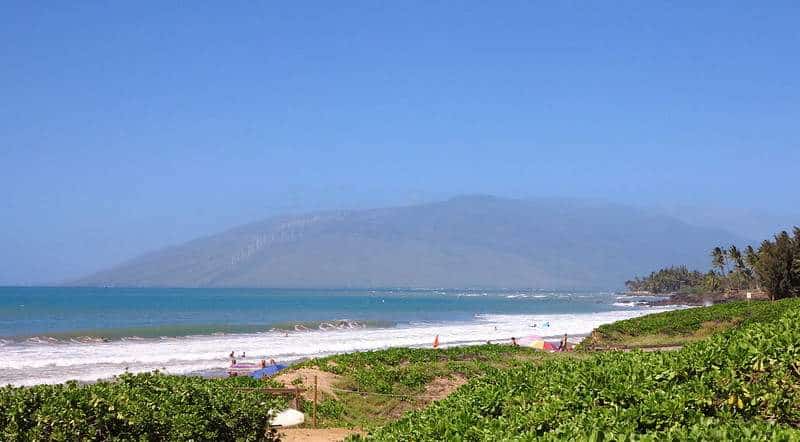
3. Kalama Beach Park
Kalama Beach Park is less about the beach and more about the park. There’s a huge grassy area with sports fields, skate park, playground, and facilities, but the beach portion is somewhat narrow and rocky in places.
Best for: Beginner surfing, skateboarding, kids’ playground, facilities
Not great for: Swimming, snorkeling, relaxing beach day
Facilities: Full facilities including restrooms, showers, picnic areas, playground, skate park
Parking: Large parking lot
The main draw here is surfing. The waves at Kalama are gentle and consistent, making it perfect for beginners. Surf schools bring students here constantly, which means it can get pretty crowded in the lineup. If you’ve never surfed before and want to try it, this is a good spot—just expect company.
For families, the park amenities are excellent. Kids can play on the playground while adults relax in the shade. But if you’re specifically looking for a beach experience—swimming, sunbathing on nice sand, that sort of thing—I’d skip Kalama and head to one of the Kamaole beaches instead.
4. Cove Park (The Cove)
Right next to Kalama, Cove Park (or “The Cove” as locals call it) is another beginner-friendly surf spot. The sandy beach break makes it forgiving for learning to surf, and the waves are usually small to moderate.
Best for: Learning to surf, stand-up paddleboarding on calm days
Not great for: Snorkeling, avoiding surf school crowds
Facilities: Portable toilets, outdoor showers, picnic tables at the parking area
Parking: Small lot at Cove Park or use Kalama Park lot nearby
The Cove is another surf school hotspot, which tells you something about the wave quality for beginners. I’ve seen people catching their first waves here, and the excitement on their faces is always fun to watch. But if you’re not surfing, there’s not a ton of reason to come here specifically.
One thing to watch for: there are shallow rocks and coral in spots, so water shoes or booties are recommended if you’re paddling out. I’ve seen people cut their feet here, which is not how you want to spend your vacation.
Summer south swells bring more waves, while winter tends to be flatter. Check conditions before heading out, especially if you’re hoping to surf.
5. Charley Young Beach
Now we’re getting to the beaches I actually recommend for most visitors. Charley Young is a lovely beach tucked between Kalama and Kamaole I, and it tends to be less crowded than the Kamaole parks while offering similar conditions.
Best for: Snorkeling, swimming, avoiding crowds, sea turtle sightings
Not great for: Facilities (limited), shade
Facilities: Portable toilet, outdoor shower—more facilities available a short walk south at Kamaole I
Parking: Small lot off Kaiau Place (turn at Maui Vista sign)
I have a soft spot for Charley Young. The beach has soft sand, calm water for swimming, and decent snorkeling near the rocky areas—especially on the north end. I’ve seen green sea turtles here more than once, usually in the morning when the water is calm and visibility is good.
The parking lot is small, maybe 15-20 spots, so get there early. If it’s full, you can park at Kamaole I and walk north along the beach. Actually, Charley Young is technically just the northern section of Kamaole I, but it has its own access point and feels like a separate beach.
Mornings are best before the wind picks up. By afternoon, it can get choppy, but that’s true of most Kihei beaches. The atmosphere here is more relaxed and local compared to the busier Kamaole parks. If you’re looking for a quieter alternative to Kam I with similar conditions, this is it.
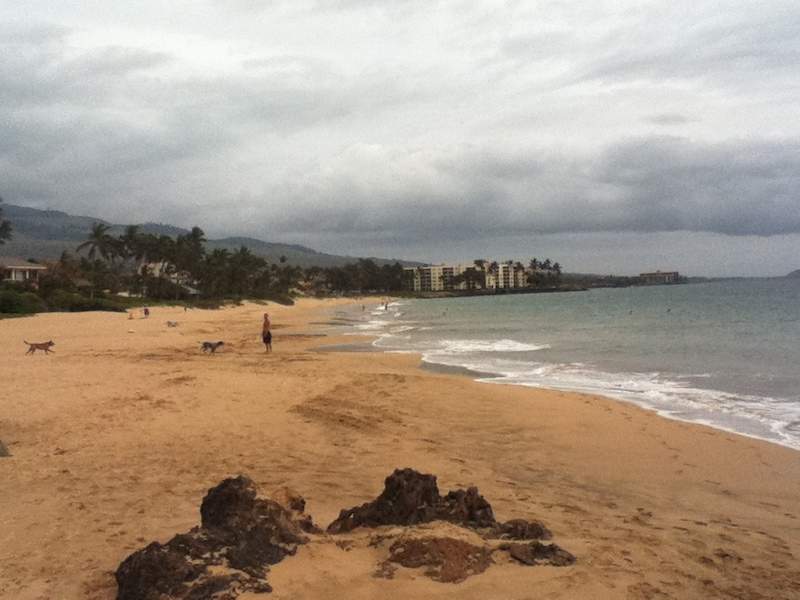
6. Kamaole Beach Park I (Kam I)
Here we go—the first of the three famous Kamaole Beach Parks. Kam I is the northernmost and, in my opinion, one of the best all-around beaches in Kihei.
Best for: Swimming, families, snorkeling at the ends, facilities, lifeguarded beach
Not great for: Solitude, avoiding tourists
Facilities: Full facilities including lifeguard, restrooms, showers, picnic tables
Parking: Parking lot on the ocean side of South Kihei Road
Kam I has beautiful soft white sand—probably the best sand of all the Kihei beaches. It’s wide, it’s long (about half a mile), and the swimming is excellent. The water is usually calm with a sandy bottom, making it perfect for families with kids. I’ve spent multiple full days here and never gotten bored.
For snorkeling, the rocky areas at the north and south ends of the beach are your best bet. The middle section is mostly sandy bottom, which is great for swimming but doesn’t offer much to see underwater. Early morning snorkeling at either end can be really good—I’ve seen lots of fish and occasional turtles.
The beach gets crowded, especially on weekends and during peak tourist season. But it’s big enough that it rarely feels unbearably packed. There’s a lifeguard on duty, which is reassuring if you’re traveling with kids or less confident swimmers.
Parking can be tricky during midday. The lot fills up, and street parking along South Kihei Road also gets taken. I usually try to arrive by 9-10 AM to secure a spot.
7. Kamaole Beach Park II (Kam II)
Kam II is my personal favorite of the three Kamaole beaches. It’s similar to Kam I but slightly smaller and, I think, a bit more intimate feeling.
Best for: Swimming, snorkeling, families, tide pools at low tide
Not great for: Finding parking (no dedicated lot)
Facilities: Full facilities including lifeguard, restrooms, showers, picnic tables, BBQ grills
Parking: Street parking only along South Kihei Road
The sand at Kam II is just as soft as Kam I, and the water is typically calm and clear. What I really like about this beach are the tide pools that form at low tide. If you’re visiting with kids who love exploring, this is fantastic—crabs, small fish, sea urchins, all kinds of marine life to observe up close. Just remind kids not to touch or disturb anything.
Snorkeling is good at both ends of the beach, particularly around the rocky points. I’ve had better luck here than at Kam I, perhaps because it’s slightly less crowded so the fish are more relaxed.
The only downside is parking. There’s no lot, so you’re stuck looking for street parking along South Kihei Road. It can take 10-15 minutes of circling to find a spot during busy times. Some people park at the Kam III lot and walk, which works fine.
There’s a reef-safe sunscreen dispenser at the beach, which I thought was a nice touch. Hawaii takes reef protection seriously, and it’s good to see.
8. Kamaole Beach Park III (Kam III)
The third Kamaole beach is smaller than the other two but has the most extensive park facilities. It’s also the most popular for bodyboarding.
Best for: Bodyboarding, picnicking, playground for kids, facilities
Not great for: Small children swimming (water can be rougher)
Facilities: Full facilities including lifeguard, restrooms, showers, extensive picnic areas, BBQ grills, playground
Parking: Large parking lot (82 spaces)
Kam III has the rockiest shoreline of the three Kamaole beaches, which creates both advantages and disadvantages. The rocks provide good snorkeling, especially around the rocky point at the south end. I’ve seen some of my best fish diversity here. But the rocks also mean the water can be a bit rougher, with waves breaking over the rocky areas and creating more turbulence.
This makes it the best Kam beach for bodyboarding. On a good day, you’ll see dozens of bodyboarders out there having a blast. But I wouldn’t bring really young kids here for swimming—stick to Kam I or II for that.
The grassy park area is huge, with tons of picnic tables and BBQ grills. On weekends, local families claim spots early and set up for all-day gatherings. There’s a swing set for children, which my niece loved when we visited.
Parking is easier here than at Kam II thanks to the lot, but it still fills up during peak times. Get there early or be prepared to wait for a spot.
9. Keawakapu Beach
Keawakapu marks the southern end of the Kihei beaches and transitions into Wailea. It’s one of the longest beaches in the area (about three-quarters of a mile) and definitely one of the most beautiful.
Best for: Swimming, snorkeling, romantic walks, sunset watching, avoiding crowds
Not great for: Facilities, shade, easy parking access
Facilities: Outdoor showers, portable toilets at north end—more limited than the Kamaole parks
Parking: Small gravel lot on South Kihei Road (look for it after 5 Palms Restaurant)
I love Keawakapu. The sand is soft and golden, the water is beautiful, and it’s noticeably less crowded than the Kamaole beaches. There’s something about this beach that just feels more serene, maybe because it’s at the edge of town or maybe because the parking is slightly less convenient so fewer people make the effort.
The snorkeling on the north end is quite good. There’s a nice coral reef where I’ve seen turtles, eels, and plenty of tropical fish. Best conditions are early morning before wind and boat traffic stir things up.
Swimming is excellent along the entire beach. The water is typically calm with a gentle sandy bottom. I’ve seen couples walking hand-in-hand at sunset more times than I can count—it’s that kind of beach.
The parking lot is small and easy to miss. Heading south on South Kihei Road, pass the Mana Kai Maui Resort and 5 Palms Restaurant, then turn right into the next driveway. Make a hard left and then another left to reach the gravel lot. If this lot is full (and it often is), parking becomes challenging. Some people park at Kam III and walk along the beach path, which takes about 10-15 minutes.
There’s a great restaurant called 5 Palms right on the beach at the north end if you want to grab lunch or a drink. Sitting there watching the sunset is pretty fantastic.
10. Mokapu Beach and Ulua Beach
Technically these are in Wailea, not Kihei, but they’re right at the border and worth mentioning. I’m grouping them together because they’re adjacent and share a parking lot.
Best for: Snorkeling, swimming, bodyboarding at Ulua
Not great for: Avoiding crowds during peak snorkel hours
Facilities: Restrooms, outdoor showers
Parking: Shared parking lot between the two beaches
Both beaches are excellent for snorkeling, particularly at the rocky point between them. Early morning is best—I’ve had incredible snorkel sessions here seeing turtles, lots of fish, and even spotted eagle rays once.
Ulua tends to get better waves for bodyboarding, while Mokapu is a bit calmer for swimming. The sand is beautiful at both, and the water clarity is typically better than at the Kihei beaches farther north.
These beaches are more popular with resort guests from the nearby Wailea hotels, so they can get crowded. But the snorkeling is good enough that it’s worth dealing with the people.
11-15. Other Kihei Beach Access Points
There are several other smaller beach access points in Kihei that are worth knowing about, even though they’re not major destinations:
Waipuilani Beach Park: Small park in central Kihei. Limited facilities, can be rocky, mostly used by nearby residents.
Kalepolepo Beach Park: Has a boat ramp and is popular with stand-up paddleboarders and kayakers. Also has the restored Ko’ie’ie Fishpond, which is culturally significant.
Lipoa Street Beach: This is one of my favorite quiet hidden gems in Kihei. It’s a small beach with coarse sand and no facilities, but it’s fantastic for sunset watching and turtle spotting. The row of palm trees creates perfect silhouettes at sunset. It’s not great for swimming—the water is often murky and there are rocks—but for a peaceful evening watching the sun go down, it’s hard to beat. Most tourists don’t know about it, so it stays relatively quiet. You can read more in my complete guide to Lipoa Street Beach.
Other access points: There are a few other unnamed beach access points along South Kihei Road, mostly just small pathways between condos. These are fine for residents but not really destinations for visitors.
Which Kihei Beach Should You Choose?
Okay, so that’s a lot of beaches. How do you actually decide where to go? Here’s my breakdown based on what you’re looking for:
Best for Families with Young Kids
Kamaole I or Kamaole II. Soft sand, calm water, lifeguards, full facilities. You really can’t go wrong with either one. Kam I has easier parking, Kam II has better tide pools.
Best for Snorkeling
Charley Young, Keawakapu (north end), or the rocky areas of the Kamaole beaches. For the absolute best snorkeling, honestly, Ulua/Mokapu in Wailea edge out the Kihei beaches, but they’re also more crowded. Early morning is key wherever you go.
If you want to explore more snorkeling spots beyond these beaches, check out our complete South Maui snorkeling guide.
Best for Swimming
Kamaole I or Keawakapu. Both have excellent swimming conditions, sandy bottoms, and typically calm water. Keawakapu is more scenic and less crowded; Kam I has lifeguards and easier facilities.
Best for Learning to Surf
Kalama Park or Cove Park, hands down. Gentle, forgiving waves perfect for beginners. Just expect crowds of other learners and surf schools.
Best for Bodyboarding
Kamaole III or Ulua Beach. Both get decent waves for bodyboarding, especially during summer south swells.
Best for Sunset Watching
Honestly, almost any Kihei beach works for sunset since they all face west. But my favorites are Keawakapu (romantic and less crowded) and Lipoa Street Beach (those palm tree silhouettes are unbeatable). For more sunset spots beyond beaches, see our guide to the best sunset viewing locations in South Maui.
Best for Avoiding Crowds
Charley Young, Keawakapu, or Lipoa Street Beach. Sugar Beach in the early morning is also wonderfully empty. Avoid the Kamaole beaches on weekends if you want solitude.
Best for a Long Beach Walk
Sugar Beach can’t be beat—five miles of uninterrupted sand. Just go early before the wind makes it unpleasant.
Practical Tips for Kihei Beaches
Parking Strategies
Parking is probably the single biggest frustration with Kihei beaches, especially at the Kamaole parks. Here are my strategies:
- Arrive before 9 AM if possible, especially on weekends
- Weekdays are significantly easier for parking than weekends
- If your first choice beach is full, consider walking from a nearby beach—they’re all connected along the shore
- Kam I and Kam III have parking lots; Kam II is street parking only
- Never park blocking driveways or in clearly marked resident-only areas
Timing Your Visit
Mornings (7-11 AM) offer the best conditions for almost everything—calm water, less wind, better visibility for snorkeling, easier parking, fewer crowds. Afternoon trade winds typically pick up between 11 AM-2 PM and can make beach time less pleasant.
Sunset is magical on Kihei beaches, but parking gets competitive again as people arrive for sunset watching. Get there by 5 PM to secure a spot if that’s your plan.
Safety Considerations
The three Kamaole beaches have lifeguards, but most other Kihei beaches don’t. If you’re not a confident ocean swimmer, stick to the lifeguarded beaches. Watch for posted warning signs about rip currents, jellyfish, or high surf.
Reef-safe sunscreen is required by law in Hawaii. Buy it before you arrive or at local shops—it’s more expensive in Hawaii than mainland. Reapply frequently, especially after swimming.
For comprehensive safety information about swimming in Maui, check our detailed Maui beach safety guide.
What to Bring
Most Kihei beaches have limited shade, so bring:
- Beach umbrella or tent for shade
- Plenty of water and snacks
- Reef-safe sunscreen
- Snorkel gear (or rent from nearby shops)
- Beach towels and chairs
- Water shoes for rocky entries
The Kamaole beaches and some others have facilities, but not all beaches have restrooms or showers. Plan accordingly.
Best Times of Year to Visit Kihei Beaches
Kihei beaches are usable year-round, which is one of their great advantages. But there are some seasonal considerations:
Winter (December-April)
This is whale watching season, and Kihei’s west-facing beaches are among the best places in the world to see humpback whales from shore. I’ve seen whales breaching from Kamaole Beach Park, and it’s incredible. Water can be slightly choppier in winter, and you might get some rain, but temperatures are still in the mid-70s to low-80s—hardly suffering.
Summer (May-November)
This is the dry season with the calmest water conditions. Best time for snorkeling and swimming. Also the hottest months, with temperatures in the 80s and sometimes low 90s. South swells in summer can bring waves for bodyboarding and surfing.
Shoulder Seasons
April-May and September-October offer the best of both worlds—good weather, fewer crowds than peak summer or winter holidays, and reasonable water conditions.
Where to Eat Near Kihei Beaches
One advantage of Kihei over some other beach destinations is the abundance of good, affordable restaurants. You’re never far from a meal.
Near the Kamaole beaches, you’ll find Coconut’s Fish Cafe (excellent fish tacos), Nalu’s South Shore Grill (burgers and Hawaiian dishes), and plenty of other options along South Kihei Road. For a nicer dinner, 5 Palms at Keawakapu Beach offers beachfront dining with beautiful sunset views.
For a complete breakdown of the best places to eat in Kihei, see our comprehensive Kihei restaurants guide.
My Personal Kihei Beach Rankings
If I had to rank my top five Kihei beaches based on all my visits, here’s how I’d do it:
- Keawakapu Beach – Beautiful, less crowded, great swimming and snorkeling, romantic atmosphere
- Kamaole Beach Park II – Perfect balance of facilities, good snorkeling, tide pools, family-friendly
- Charley Young Beach – Quieter alternative to the Kamaole parks with similar conditions
- Kamaole Beach Park I – Best sand, excellent swimming, good facilities, lifeguard
- Lipoa Street Beach – Not for swimming, but unbeatable for quiet sunset watching and turtle spotting
But honestly, the “best” beach depends entirely on what you’re looking for. A family with young kids will have a different ranking than a couple looking for romance, or a surfer looking for waves, or a snorkeler looking for marine life.
Kihei vs. Wailea Beaches
People often ask whether Kihei or Wailea has better beaches. The truth is, they’re different.
Wailea beaches (Wailea Beach, Polo Beach, etc.) tend to be more manicured, backed by luxury resorts, with softer sand and sometimes better snorkeling. They also have fewer crowds in some spots because resort guests monopolize them.
Kihei beaches are more accessible, more local, more varied, and generally cheaper to access since you’re not paying resort prices for everything. They’re also more family-oriented with better facilities at places like the Kamaole parks.
If you’re trying to decide where to stay, we’ve created a detailed comparison in our Kihei vs. Wailea guide that breaks down all the factors.
I think the ideal approach is to stay in Kihei (more affordable) and visit both Kihei and Wailea beaches. They’re only minutes apart by car, so you can easily experience both.
Final Thoughts
After exploring all 15 Kihei beach access points, I keep coming back to the same beaches for different reasons. On a typical Maui trip, I’ll swim at Kam I or Kam II, snorkel at Charley Young or Keawakapu, watch sunset at Lipoa Street Beach, and maybe take an early morning walk on Sugar Beach.
The variety is what makes Kihei special. You don’t need to leave this six-mile stretch of coastline to find whatever beach experience you’re craving. Want a full-service family beach day? Kamaole parks have you covered. Want a romantic sunset? Keawakapu delivers. Want to learn to surf? Kalama or Cove Park. Want solitude? Sugar Beach at dawn or Lipoa Street Beach at dusk.
Don’t feel like you need to visit all 15 beaches. Pick two or three based on your priorities and really enjoy them. Quality over quantity, you know?
And remember—mornings are almost always better than afternoons for actually being in the water. Those trade winds are no joke. But hey, if you arrive in the afternoon, grab a sunset spot and a cold drink. That’s pretty good too.