
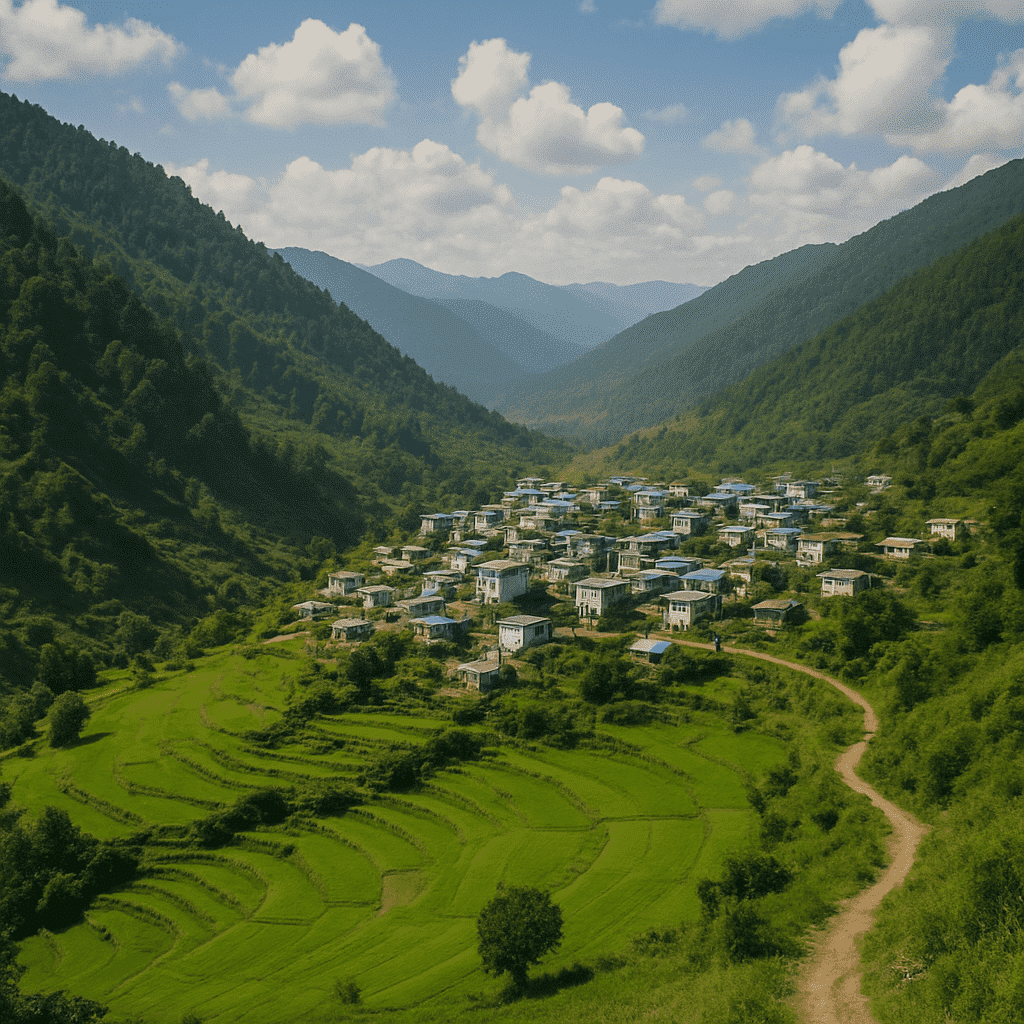
Bhararisain, Uttarakhand: Summer Capital Guide (What to Know, How to Reach, When to Go)
What is Bhararisain?
Bhararisain is officially recognized as Uttarakhand’s summer capital, a role that complements Dehradun’s position as the winter capital and underscores the state’s effort to balance governance across its mountainous terrain and diverse regions.
Administratively, Bhararisain lies in Chamoli district and is closely associated with Gairsain, which provides the more commonly known reference point for directions and district-level context in local travel and news reporting.
The summer capital designation emerged in 2020 through an announcement in early March followed by a formal notification in June, creating a simple timeline that helps explain why the name began appearing more frequently in headlines and travel conversations that year. For official context on the state’s governance structure, see the Government of Uttarakhand’s portal overview via the National Portal of India: Uttarakhand Government (official).
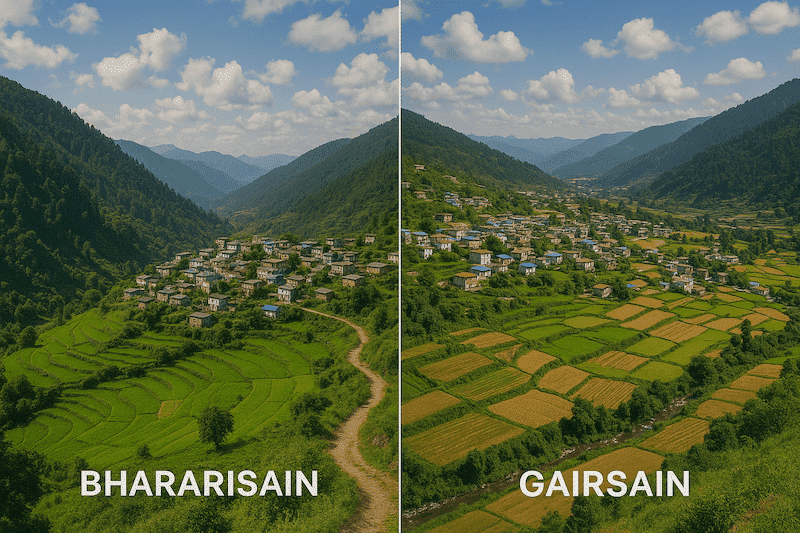
Bhararisain vs Gairsain: the useful distinction
People often use Bhararisain and Gairsain interchangeably, but they are not identical; Bhararisain is the identified summer capital locality with the assembly complex, while Gairsain is the nearby town and tehsil, and the two are linked by a relatively short road distance that keeps them functionally connected in everyday references.
The commonly cited separation is around 14 km, a small span in the hills that nonetheless creates real-world differences when you’re navigating to a building versus a bazaar or bus stand, so travelers should note both names when planning routes or asking for directions on the ground.
If this distinction still feels fuzzy, consider reading a focused explainer that lays it out step by step in plain language: Bhararisain vs Gairsain guide, which can be a helpful companion when you’re scanning maps or setting a destination in your navigation app.
How to reach Bhararisain
Most itineraries begin with Dehradun’s Jolly Grant Airport for air travel, with onward road journeys through the Garhwal hills, and while distances vary by route and exact stopovers, general planning frames Bhararisain as a longer hill drive that rewards early starts and flexible timing.
From Jolly Grant, travelers usually pass Rishikesh and follow the hill highways toward Srinagar and Karnaprayag before turning toward Gairsain and Bhararisain, a sequence that is familiar to those who have driven the Char Dham corridors or visited nearby hubs like Auli and Joshimath.
Rail travelers often use Haridwar or Rishikesh as gateways, connecting to road transport for the final leg, which is a sensible plan in a region where railway lines do not yet trace the high ridges and where road conditions can vary with weather and season.
If you prefer a step-by-step walkthrough—with route options, waypoints, and driving tips—bookmark the dedicated guide: How to reach Bhararisain, which is intended to keep directions straightforward without pretending that mountains always cooperate with schedules.
For rough orientation, some travel resources reference approximately 160 km from Jolly Grant to the Bhararisain area, though other institutional sources cite greater hill-driving distances depending on specific route choices and local landmarks, so building a buffer into your plan is the sensible move.
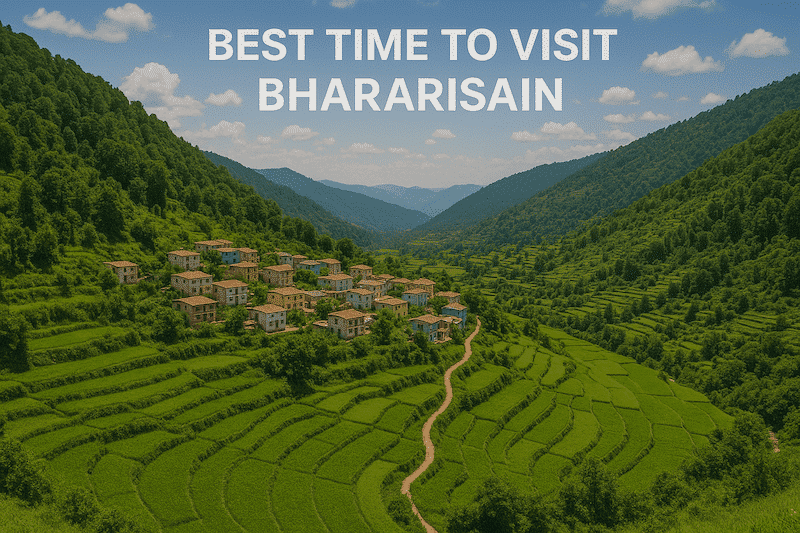
Best time to visit Bhararisain
Summer and the post-monsoon autumn window are generally the most comfortable periods for casual travel, with clearer skies and more predictable road conditions, while monsoon months can be lush and beautiful but also demanding on timetables and patience.
Winter, to be fair, can be strikingly scenic, yet access may be complicated by weather and daylight, so if the goal is an uncomplicated first encounter with Bhararisain’s setting, a summer or early autumn plan tends to feel simpler and less rushed.
For a concise, month-by-month view that helps you align expectations with real road behavior, the seasonal snapshot here is expanded in a companion piece: Best time to visit Bhararisain, which keeps advice grounded rather than glossy.
Things to do around Bhararisain
Most visitors weave Bhararisain into broader Garhwal circuits, pairing administrative curiosity with mountain time in nearby places such as Auli, Joshimath, Chopta, and Tungnath, which sit within familiar hill-driving arcs and offer a satisfying mix of views and short walks.
Even if you’re not chasing summits, it’s easy enough to make space for scenic stops and gentle trails, the kind that invite unhurried pauses rather than training plans, and that, in a way, matches the quieter civic rhythm of a seasonal capital.
Consider reserving a half-day for drives that stitch together viewpoints with tea breaks and local markets, because that fabric of small experiences often carries the day more than a single “must do” list item ever could in hill country.
Bhararisain’s assembly and the 2020 timeline
Bhararisain’s contemporary identity is anchored by the Uttarakhand Vidhan Sabha complex, which shifted the state’s summer governance focus into Chamoli and codified the long-discussed idea of balancing administrative attention across regions. For official state updates and announcements around governance, refer to the Chief Minister, Government of Uttarakhand and the Raj Bhawan Uttarakhand.
The sequence is straightforward: an announcement on March 4, 2020, during the budget session, followed by a formal notification on June 8, 2020, after the Governor’s assent, giving Bhararisain its summer capital status in unambiguous terms.
The outcome doesn’t change Dehradun’s role as winter capital, but it does add a seasonal cadence to state sessions and, perhaps more quietly, introduces travelers to a different rhythm of movement and attention in the Garhwal hills.
Practical tips that help
Start drives early, keep a flexible buffer for weather and traffic, and avoid fixating on minute-by-minute ETAs, because hill roads have a way of reminding plans to slow down and look around, which is usually not bad advice anyway.
Pair Bhararisain with one or two nearby stops rather than four or five, since trying to do too much in the hills often means doing less of the actual enjoying, and it’s better—one might argue—to finish a day wishing for one more viewpoint than to crawl into bed exhausted.
If using public transport, plan connections via Haridwar or Rishikesh, and if hiring a vehicle from Dehradun, confirm route familiarity with the driver, especially for the Karnaprayag–Gairsain leg, where local knowledge can be as helpful as any map.
Simple 2–3 day frames for Bhararisain
For two days, consider an early airport arrival, a steady drive into the hills, an afternoon with a modest walk and a market amble, and a second day that blends a morning at or near the assembly area with a scenic detour toward Chopta or a quieter viewpoint before descending, which keeps ambition in check without feeling sparse.
With three days, add a detour toward Auli or Joshimath to chase a longer view, and leave some room—literally an hour or two—to do nothing in particular, because that’s often when the hills hand you the memory you keep, even if it’s just a ridge catching late light.
If this framing resonates, tie it to your route plan and your season choice, and then keep both slightly loose, because a plan that bends a little tends to survive the hills better than one that snaps at the first unexpected delay.
Fast facts for context
- Bhararisain is Uttarakhand’s summer capital in Chamoli district, near Gairsain in the Garhwal region, and this pairing explains most mentions you’ll see in news and travel notes.
- The summer capital status was announced on March 4, 2020, and formally notified on June 8, 2020, after the Governor’s assent, which gives a clear, two-step timeline for readers and researchers alike.
- Dehradun remains the winter capital, so itineraries commonly route via Dehradun’s airport even when the final destination is Bhararisain in the hills.
- The commonly referenced distance between Gairsain and Bhararisain is roughly 14 km, which is close enough to feel adjacent but far enough to matter when you’re choosing exact pin drops.
- Nearby add-ons include Auli, Joshimath, Chopta, and Tungnath, which are popular enough to anchor extra days without demanding highly technical hiking.
FAQs about Bhararisain
Is Bhararisain the summer capital of Uttarakhand?
Yes, Bhararisain is the designated summer capital, an identity shaped in 2020 through an announcement in March and a formal notification in June, which together established the seasonal capital structure in clear terms.
How is Bhararisain different from Gairsain?
Bhararisain refers to the summer capital locality associated with the state assembly complex, while Gairsain is the nearby town and tehsil, and the two are connected but not identical in administrative and navigational terms.
How do I get to Bhararisain?
Fly into Dehradun’s Jolly Grant Airport, connect by road via Rishikesh–Srinagar–Karnaprayag toward Gairsain and Bhararisain, or arrive by rail to Haridwar or Rishikesh and continue by road, keeping an eye on weather and daylight in the hills.
What’s the best time to visit?
Summer and post-monsoon are the most forgiving windows for comfort and visibility, while winter can be beautiful but occasionally demanding for access and timing, so pick the season that matches your appetite for variable conditions.
Does Dehradun still matter if Bhararisain is the summer capital?
Absolutely, Dehradun remains the winter capital and principal air gateway, which is why most practical itineraries still pivot through Dehradun even if the heart of your trip is in and around Bhararisain.
Before you go
Think of Bhararisain as both a place and a role, which helps expectations land in the right place, and if one idea holds the article together, it’s that a seasonal capital can be both a destination and a bridge to nearby mountains that reward unhurried travel.
If you want to dig deeper on any single topic without losing the bigger picture, keep the three companion guides handy—differences with Gairsain, getting there, and the best time by season—so your plan feels confident without pretending the hills are ever entirely predictable.
For authoritative state information, you can also consult the Uttarakhand Government (official), the Raj Bhawan Uttarakhand, and the Chief Minister’s official site for current notices and updates.