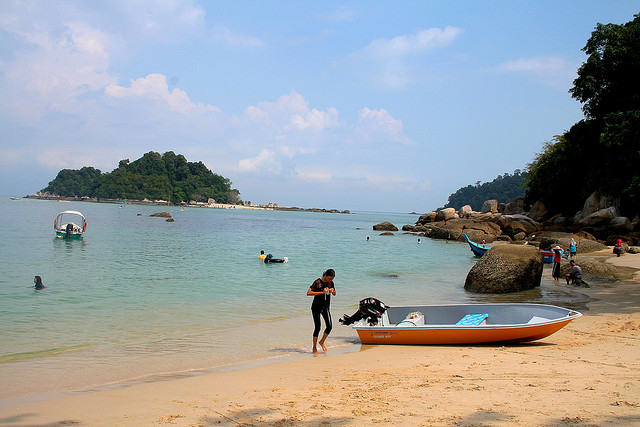
Tag Archives: island

Sipadan – The Ultimate Nature Escape

diving Sipadan   The Ultimate Nature EscapeBy JACOB MOJIWAT

There is beauty underwater all over the world. But there’s only one place that Jacques Cousteau once called an “Untouched Piece of Art.” This place is the island of Sipadan, which has some of the most beautiful, rich and diverse coral and marine life in the world. But it is not heard of by many. However, as many diving experts will tell you, among the diving community, Sipadan is known by everyone. It is so well known and admired among those that explore the ocean’s depths, it is one of the top diving destinations in the world. What might attract you to explore this island are the incredible and unusual marine life sightings. And when you’re not diving below the water, you can enjoy spying one of the most diverse and wondrous bird populations of the world.

Sipadan, an island off the coast of Malaysia in the Sulu Sea, offers divers crystal blue water and visibility depths of between 50 to over 130 feet (15 to over 40 meters). There are thousands of species of fish swimming amongst both hard and soft pristine coral. As the operator of a diving company, it is a joy for me to bring divers down to experience the explosion of color and marine wonderment such as enjoying the abundance of turtles that swim and lounge around the island. There are four species of turtles on the island: the leatherback, the olive ridley, Hawksbill and the Green turtle. The Green turtle can grow to be four feet long and is considered to be a lucky find if sighted on the island.The olive ridley turtle was named for the olive color of its heart-shaped shell and is interesting among the turtles because it is the smallest, only about two feet long and 80 to 110 pounds (35 to 50 kg). All of the turtle species on the island are endangered, yet they appear to be so plentiful in Sipadan. Diving companies will guarantee that you will see a turtle during each dive. Except for the Green turtle, the other turtles seem to always be around. And they are often curious and friendly with divers.

Beneath the crystalline waters, a wide, colorful palette of species swim around the island that is only 0.5 km long, 200 meters wide and can be walked in about 25 minutes. During a diving excursion you might encounter hammerheads, reef sharks, sting rays, the elusive whale shark, trevalys, giant bumphead parrotfish, as well as the plentiful and pretty nudibranchs. Dependable favorites await in schools, such as thousands of trevallies and barracuda. It is a celebratory moment when the rare napoleon wrasse, grouper, or puffer fish are seen because it is testimony to the wishful thinking that not all have been eaten or fished out of the seas. An explosion of color follows schools of tiny fish like the anthias, damselfish, cardinalfish and blennies. A curious and slow-moving diver might spot the many crustaceans, eels, and stonefish that are more on the shy side.

Setting a complimentary backdrop to the island’s fish, are the glorious coral, such as the large Gorgonion fans, sea whips and feather stars. Not only are the coral structures fascinating, but the marine caves are equally intriguing. The island is known to have the largest variety of soft coral in the world. Along with this comes beautiful coral fishes. But be careful, sometimes a shark might swim by. Or a barracuda! The much friendlier turtles abound in a place called Turtle Cavern. In order to get to the cavern a diver must go to one of the best beach dive sites in the world, appropriately named “Drop Off.” A mere 20 feet (5 meters) from shore, a wall plunges a dazzling 2,800 ft (850 meters). The wall is encrusted with a wide variety of coral. Living on this wall are plenty of lionfish andsmaller reef fish. The entrance to Turtle Cavern is 70 ft (21 meters) down along the wall. Turtles swim in and out of the cavern and along the wall. The cavern can be difficult to navigate and there is now a rule that all divers must be accompanied by a resort operator in order to explore the cave, assome divers have not made it out. A deep penetration into the cave will reveal a species of fish specifically adapted to low light depths of the ocean.

As a diver you need to be aware of your surroundings and not handle the coral. Reckless divers and snorkelers have caused some coral damage. Also, surrounding boats and large diving groups have stirred up silt and sediment. This can actually choke and suffocate coral polyps. The Sipadan reef was also hurt by a powerful tropical storm named Greg which destroyed some shallower parts of the reef. This part of the reef has not recovered, especially with the addition of increased water temperatures from global warming. In 2006 the reef took an even heavier blow when a barge completely wiped out delicate corals between the pier and a popular island dive site called Barracuda Point. These incidents provide a good reminder on how fragile the corals and sealife can be.

As if there isn’t enough beauty below the waves, Sipadan is also known as a wondrous place for bird watching and was even designated a bird sanctuary. Bird watchers can observe 47 different species of birds, including a plentitude of frigates, sea eagles, terns, and kingfishers that glide across the small island. Sipadan also serves as an integral stopover point for migratory birds like the greater sand plover, common sandpiper, wood sandpiper, as well as the Nicobar pigeon which flies from China during the colder times of year. An interesting bird on the island that makes use of its kill in a practical way is the kingfisher which nests in holes. These holes, however, are lined with fish bones which the bird uses after it has eaten. Kingfishers are unique, exotic looking birds that are brightly colored and feature short legs and tails, big heads, and long, powerful beaks. Their diets consist of small vertebrates, insects, and fish. The sound of their cry has been compared to a cackle. Although the island is no longer open to visitors for animal exploration, serious bird watchers might want to take a short boat trip from a nearby island and observe from the designated areas near the Sipadan’s jetty.

The Malaysian government is working hard to protect the wildlife and marine life of Sipadan. In the past there had been five resorts along the north side of the island. But in 2002 the government closed the hotels and diving sites to protect the environment. Sipadan was nearly destroyed in the 1990s partly because the diving industry converged too heavily on the tiny island. Visitors cannot stay in Sipadan. So, if you plan to visit, you must stay in nearby Mabul or Semporna and take a minutes-long boat ride to Sipadan. Sipadan sits amongst a group of islands that all provide access. An hours long boat ride can also be taken from Mataking and Pompong. The island is also referred to as Pulau Sipadan. According to locals, the island is pronounced Siparan. Many years ago, it is said, a person named Siparan from Sempurna Island collected green turtle eggs. People began calling the island Siparan after this man. The name has stuck with locals to this day, but the official government name is Sipadan.

If you plan on visiting Sipadan for some diving or bird watching, get ready to be amazed by the pristine marine environment. It takes planning and dedication to make it to Sipadan, but what it has to offer puts it on many a “best-of” list which should then put it on many a “must-do” list. Sipadan might grow in fame throughout the years as it becomes more discovered, but it’s good to know the beautiful coral, fish and birds will always be well protected and ready to enjoy.

Jacob Mojiwat is passionate about sharing the wonders of scuba diving with others. He is the owner of AsiaDivingVacation.com. His dive company takes divers diving in Sipadan as well to other beautiful Asian dive destinations.

Passionate About Palma

palma night Passionate About Palma

Palma at night.

By ROSS FRASER

Palma, the capital of Mallorca, is a European city that can beat many tourist cities hands down. Small enough to navigate your way around easily, but big enough to keep you entertained for a long weekend to a week.

To many people Mallorca is synonymous with drunken sun-burnt tourists and cheap package holidays. But step away from the mega resorts of Magaluf and Palma Nova and you will find the capital of Mallorca. Palma is a city with thousands of years of history and tradition but also grown up and modern. This blend of old and new has created a vibrant, cultural melting pot that is fascinating to explore and will leave you wanting to come back again and again.

As a weekend break spot Palma has many things to do on the ‘tourist trail’ - both the old Palma and the new Palma. Some you will know, some you may not, but they are all worth seeing if you get the chance to visit it.

Old Palma

Palma is layered with hundreds of years of history as the city changed hands from different civilizations. In order to get a better understanding of who lived here there are three places that you must see.

Banys Arabs

Situated in the gardens of Can Fontirroig in the Can Serra (near the cathedral) the Banys Arabs (Literally Arab Baths) are one of the few remaining examples of Moorish culture preserved on the island and also the single most important monument to Muslim domination of the island. The baths are made up of a square room with 12 columns which was originally used for hot baths. Build in the XI century and only remain in part – the cold baths no longer exist and it is suggested that the baths originally formed part of a Moorish palace.

Llotja Exchange

This now somewhat weather beaten 15th century Gothic building was originally built as the merchant house and stock exchange and turned Mallorca into a booming profitable island. Now the building stands testament to a bygone era and houses the odd exhibition into the bargain.

La Seu

You can’t come to Palma and not see the cathedral; it is one of the most striking buildings in the city. Construction of this stunning building started in the 13th century and took around 300 years to build. Predominately a Gothic building in design – however the main facade was replaced in 1851 after an earthquake. In 1903 to 1914 Gaudi carried out a number of renovations to La Seu opening up windows and adding new stained glass. The outcome of all this has created a hybrid of Renaissance and Gothic elements which mixed in with modern design create a striking and a must see piece of religious architecture.

Contemporary Palma

Spain to me is as much about art as it is history and the contemporary art movement has long been a key element in the success of many artists in Mallorca and across Spain. Thankfully Palma is blessed with a number of contemporary art venues that you should try and visit when you are there.

Pilar and Joan Miro Foundation in Mallorca

You cannot think of modern art without thinking of Joan Miró. And Son Abrines just outside Cala Major was the final home for Joan and his wife from 1956 until his death. Following his death, The Pilar and Joan Miró Foundation was the result of Joan Miró’s last will. This really is a truly magical place and one that cannot be missed from a visit to Palma.

Es Baluard Contemporary Art Museum

Es Baluard (named so because of the ship yard that once stood there) now houses a contemporary gallery. The design of the building is one of the most striking things about it, rising like a concrete phoenix from the remains of previous buildings that once stood there. This gallery houses a collection of local Mallorcan work as well as work from a number of key 20th century including Rene Magritte, Oskar Kokoschka and Edouard Vuillard.

Museu d’Art Espanyol Contemporani – Fundacion Juan March

This is a great place to visit to get a true understanding of what Spain has given to contemporary art. There is a permanent collection of around 70 notable pieces from a selection of 20th century artists – Including Salvador Dali, Joan Miró and Pablo Picasso.

It’s easy to think of Spain and immediately think of Barcelona and Madrid, but Palma really is a fantastic city break destination and one that will always have a special place in my heart!

Find more information at:
Pilar and Joan Miro Foundation

Es Baluard Contemporary Art Museum

Museu d’Art Espanyol Contemporani – Fundacion Juan March

Ross Fraser is a travel blogger who runs his own blog Europe Traveller. He is also extremely passionate about Majorca from his 20+ years of visiting the island. You can learn more about Palma on his site.

Zanzibar: The Locals’ Unguja

tropical beach Zanzibar: The Locals UngujaBy VALERIE MELLEMA

Zanzibar; even the name of this enchanting island is exotic. While the world knows it as Zanzibar, locals call it Unguja and know it for one of the most brilliant jewels in Africa. Located 25 miles off the shore of Tanzania, travelers will find a lush paradise, rich history and a welcoming people.

What can you find to do in Zanzibar?  Here are a few of the best attractions on the island.

Beaches – Zanzibar is an island, so, of course, there are beaches to explore and enjoy.  You will find numerous sandy beaches, with overhanging palm trees for your enjoyment.  The crystalline Indian Ocean stretches away to the east, while the coast of mainland Africa can be glimpsed to the west.

More than 25 beaches can be found in Zanzibar, some remote, some convenient to cities.  All of them are bordered by quite fishing villages, where life moves at a slower pace.

Stone Town – This historic city is the cultural heart of Zanzibar. You will find palatial homes once owned by Arab merchant princes, market squares, charming bazaars and more. The architecture in the city is stunning, featuring a mixture of Arabic and European influences that is uniquely Zanzibar. While the city has been designated as a World Heritage Site, it is very much a living, breathing city, with all the amenities you would expect.

Diving – Zanzibar is home to some of the best diving in the world. Incredible coral reefs, pristine waters and astounding sea life are the main attractions. The waters are warm and clear, as well, providing you with some of the best diving environments anywhere.  Zanzibar Watersports is one of the best diving centers in the area, offering PADI certification and numerous expeditions throughout the surrounding islands.

Island Exploration - While the main island of Zanzibar is as far as most visitors get, the nation is actually an archipelago, featuring numerous other islands and islets. These other islands make perfect opportunities for exploration and travel. Chumbe and Chapwani offer accommodations and leisure activities, while you will find uninhabited islands that provide even more enjoyment in the area.

In short, whether you want to relax on a white sand beach, swim or dive the beautiful waters or enjoy exotic dining options, you will find numerous options in Zanzibar. The warm, welcoming people make you feel at home and the relatively low number of tourists on outlying islands is a huge bonus.

Discover an Island Paradise

island Discover an Island ParadiseBy DAVID DI CRISTO

There’s something about islands. Maybe it’s the idea of a limited, knowable place with definite boundaries. Maybe it’s the idea of an isolated place, cut off from the cares and worries of the rest of the world. Whatever it is, it makes the island a powerful symbol. Avalon, Bali Hai, Treasure Island, Utopia, the desert island to be marooned on with (your choice here), islands are the very stuff of myth and adventure.

Even against that kind of competition, real islands don’t come off too badly. What about a scenic island country such as New Zealand? Accommodation in New Zealand includes a range of hotels, motels, lodges, backpackers, holiday houses and bed & breakfasts. Real places with real inhabitants that live ordinary lives. Still, right or wrong, their larger-than-life names mean paradise to the rest of the world. On the other end of the scale, Devil’s Island is equally legendary. In between those extremes are literally numberless islands, as big as Greenland or as small as you can imagine.

And why not imagine an island? Your island might be warm and sunny with year-round shirt-sleeve weather, unlimited golf and exquisite vegetarian cuisine. Perhaps you’d prefer a cool, invigorating climate with some skiing and salmon fishing. Maybe nothing but a classic South Pacific coral island with pareu-clad Polynesians will do. It could be you’re entranced by the thought of the exotic; you yearn to immerse yourself in a totally different environment, language, culture and cuisine.

Well, they’re out there. All the islands I described are real and there are thousands more, each at least a little different, some literally worlds apart. Dream up the perfect island for you, then start looking. It’s out there, I promise, and you can get there from here.