
Bhararisain vs Gairsain: What’s the Difference?
The Basics: Two Places, One Region
Bhararisain is a small hamlet nestled in Chamoli district, in the heart of Garhwal country, and it has, for the most part, remained quiet and relatively unknown until very recently. But, more importantly, it now takes center stage as Uttarakhand’s summer capital — a role that arrived suddenly in 2020 with the formal notification of the Vidhan Sabha complex. Gairsain, on the other hand, is a larger town (and tehsil, which is an administrative subdivision) located a little to the southwest, known historically as a political and geographic fulcrum between the Garhwal and Kumaon regions of Uttarakhand.
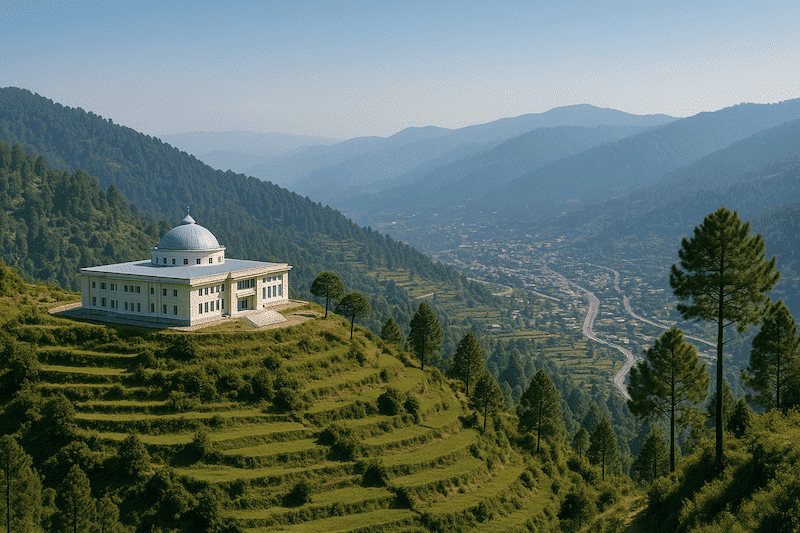
They’re neighbors, certainly, but they occupy very different roles in the state’s administrative and cultural landscape. Bhararisain is the administrative newcomer, thanks to the state assembly complex built here to host the Vidhan Sabha’s summer sessions, while Gairsain remains the established commercial and local administrative center that serves the broader Chamoli district. One might say that Gairsain is the town with roots; Bhararisain is the place with a new title and a government building.
If you’re wondering how close they are: about 14 kilometers by winding hill road, which sometimes feels much farther in the mountains than it looks on a standard map. This proximity is why, even today, many locals and journalists refer to the assembly complex as “near Gairsain,” and why most directions frame Bhararisain in terms of its relationship with Gairsain. But, crucially, the state capital designation belongs to Bhararisain, not Gairsain, which is an important distinction if you’re filling out forms or trying to understand an official announcement. The summer capital status is officially Bhararisain’s; Gairsain remains the town that most travelers and locals use as their functional hub.
Why Do People Mix Up the Names?
The confusion between these two places isn’t just casual sloppiness or a quirk of how place names work in the mountains — it’s rooted in genuine history and political context. For years, even decades, Gairsain was the rallying point for demands to shift Uttarakhand’s capital out of Dehradun, which sits in the foothills and has historically favored the southern, more developed Kumaon region. Activists and community leaders pushed for a more central location that would balance Garhwal and Kumaon interests equally. Gairsain, positioned roughly in the middle geographically and culturally between the two regions, seemed like the obvious choice to many people.
When the government finally acted on these demands, the decision was made to build the new assembly building — not directly in Gairsain proper, but nearby, in Bhararisain. This may have been due to land availability, topography, or planning considerations, but the outcome was that the official “summer capital” designation went to Bhararisain, even though Gairsain had been the symbolic and political heart of the campaign for a new capital. Old habits and expectations die hard, so locals, journalists, and even some government notifications sometimes mix or blur the terms, referring to “Gairsain as the summer capital” when technically, it’s Bhararisain that holds the official status.
Another reason for the confusion: most transport connections, markets, accommodations, and daily services cluster around Gairsain. If you’re arriving at the district for the first time, you’ll likely arrive in Gairsain, find a hotel there, eat breakfast there, and then make a 14 km excursion to Bhararisain if you need to visit the assembly complex. So, functionally, Gairsain remains the hub, even though administratively, Bhararisain is now “the capital.” It’s a common pattern in hill regions — the official name and the practical reality sometimes diverge in ways that confuse outsiders and occasionally amuse locals.
Administrative Roles and Local Life
For governance and state-level politics, Bhararisain is now the center stage for Uttarakhand’s summer legislative sessions. The Vidhan Sabha complex was constructed in Bhararisain and was formally inaugurated here in 2020, marking the official transfer of summer assembly proceedings from Dehradun to the mountains. This shift — announced on March 4, 2020, during a state budget session, and then formally notified on June 8, 2020, after receiving the Governor’s assent — was a significant milestone for state identity, political representation, and development priorities in Garhwal. The notification meant that, every summer, state legislators, ministers, and administrative staff would gather in Bhararisain rather than Dehradun, fundamentally altering the rhythm of governance and, symbolically, acknowledging Garhwal’s importance.
The assembly complex building itself is the chief point of interest in Bhararisain — a modern, purpose-built structure designed to house legislative business during the warmer months. For current information about assembly schedules, sessions, and official notifications, you can cross-check the Raj Bhawan Uttarakhand portal or through the Chief Minister’s official portal, both of which maintain information about state governance and upcoming sessions.
In everyday local life, Gairsain remains the practical regional hub and the true nerve center of the district. You’ll find functioning local markets, public transport terminals (including bus stands connecting to major cities), a working post office, schools, hospitals, and most of the accommodation options in Gairsain. It’s where locals go to buy groceries, catch buses, conduct business, and gather for community events. Bhararisain, by contrast, is quieter and more institutional in character — oriented around the assembly building and a few nearby facilities like guesthouses for visiting legislators and administrative personnel. The “summer capital” label brings occasional flurries of political activity and media attention, but most days it remains serene and, frankly, sleepy by comparison.
What this means in practice: if you’re visiting the region for any extended period, you’ll be based in Gairsain for comfort, convenience, and access to services. Bhararisain is a day trip or a specific destination if you’re interested in the assembly complex or in seeing the symbolic seat of summer governance. Neither place is a major tourist destination in the way that, say, Auli or Chopta are, but they both serve important functions — Gairsain as the living, breathing town, and Bhararisain as the administrative statement.
Geographic and Transport Context
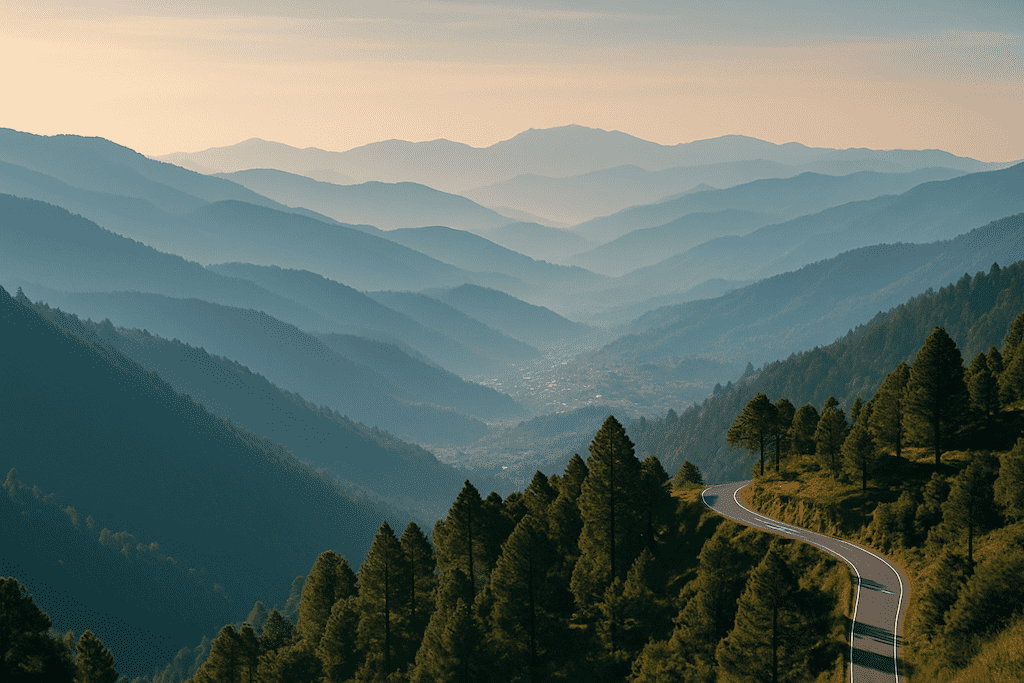
Both Bhararisain and Gairsain sit within the broader Chamoli district, in Uttarakhand’s Garhwal region. The terrain is characteristically hilly, with winding roads, mountain valleys, and views that shift dramatically with the season. The altitude is around 1,600 to 1,700 meters above sea level, placing the region in the intermediate hill belt where summers are cool and winters can bring snow.
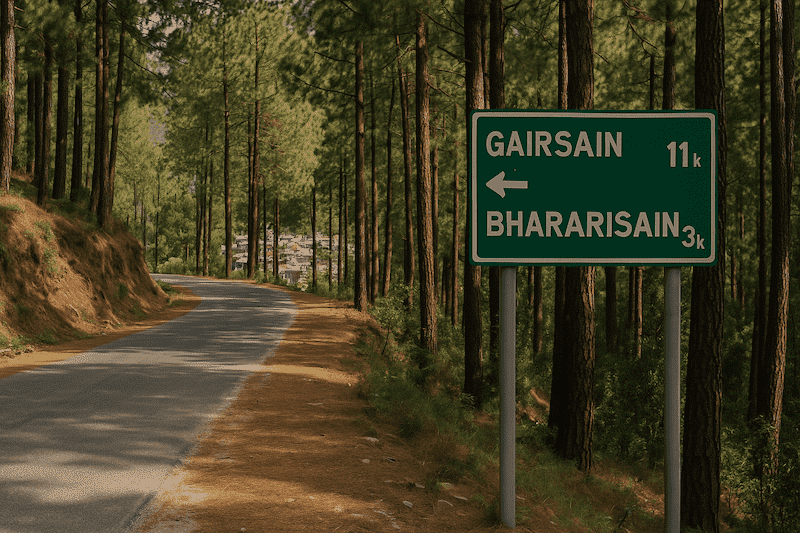
The simplest approach for visitors is to travel to Gairsain first — by road from Dehradun (which is roughly 300 kilometers away), Rishikesh (closer, around 200 kilometers), or Haridwar (also around 200 kilometers). Roads from these gateways wind up into the hills through towns like Srinagar and Karnaprayag, gradually gaining altitude and revealing the landscape of the Garhwal region. Once you’ve reached Gairsain, Bhararisain is another short drive — about 14 kilometers — up further into the hills.
The route between Gairsain and Bhararisain winds through some genuinely picturesque Gharwali terrain, with pine forests, glimpses of distant ridges, and the kind of subtle transitions in forest composition and ridge elevation that don’t show up in most guidebooks. The drive takes roughly 30 to 45 minutes depending on road conditions and traffic, which, at this altitude, is usually minimal. There aren’t many signs trumpeting Bhararisain itself, so navigation usually revolves around asking locals for the “Vidhan Sabha” or the “summer capital complex” once you’re in the general area.
Quick Comparison Table
| Aspect | Bhararisain | Gairsain |
|---|---|---|
| Official Role | Uttarakhand’s summer capital; seat of Vidhan Sabha during summer sessions | Established town and tehsil; district administrative center |
| District | Chamoli, Garhwal | Chamoli, Garhwal |
| Distance Apart | — | Approximately 14 kilometers by road |
| Main Facilities | Vidhan Sabha complex, limited guesthouses for legislators and visitors | Market, shops, bus terminal, hotels, post office, schools, medical facilities |
| Character | Small, institutional, quiet, focused on assembly function | Active town, commercial hub, local social and cultural center |
| Travel Advice | Day trip or specific visit; limited independent services; confirm access ahead | Use as your base for staying, eating, and arranging local transport |
| Key Events | State assembly summer sessions (typically May-June), official ceremonies | Local administration, district-level events, community gatherings |
| Contact/Information | Raj Bhawan Uttarakhand (official state portal) | Chief Minister Uttarakhand (state governance) |
Practical Takeaways for Visitors
If you’re planning a visit to see the summer capital or explore the Chamoli region, here are a few practical things to keep in mind. First, book accommodation and plan most of your logistics around Gairsain, where services are more developed and more varied. Second, if you specifically want to see the Vidhan Sabha complex or Bhararisain itself, arrange it as a day trip or a specific excursion from Gairsain, and confirm that access to the assembly complex is open (it may occasionally be restricted during legislative sessions or maintenance).
Third, don’t stress too much about mixing up the names in casual conversation — locals understand the confusion and will usually know which place you’re referring to based on context. That said, when filling out forms or booking through official channels, use “Bhararisain” for the summer capital designation and “Gairsain” for the town where you’re likely to find services.
Fourth, plan for the drive up from lower elevations. The altitude gains and winding roads can be deceptive; what looks like a two-hour drive on a map might take three or four hours in reality, especially if you’re not accustomed to hill driving or if weather conditions slow traffic. Build in buffer time, start early, and enjoy the journey rather than race the clock.
Historical Context and Why This Happened
The decision to create a summer capital at Bhararisain is tied to a broader conversation about equity and representation in Uttarakhand. The state was carved out of Uttar Pradesh in 2000, and from its inception, there was a sense (particularly among Garhwal residents and leaders) that governance was weighted toward the south, where Dehradun sits and where infrastructure was more developed. This perception fed demands for a more central capital that would acknowledge Garhwal’s role and ensure that resources and attention wouldn’t be perpetually concentrated in one location.
The idea of Gairsain as a summer capital floated around for years before finally being enacted. The 2020 decision to formally establish Bhararisain as the summer capital can be seen as a response to these long-standing grievances and a symbolic gesture of recognizing Garhwal’s importance. Whether or not it succeeds in practical terms remains to be seen, but the gesture was significant — it was a commitment to spend part of each year governing from the hills.
Connecting to Broader Travel and Travel Planning
Understanding the Bhararisain vs Gairsain distinction is a small but essential piece of navigating the Chamoli region. For the broader context — how to reach the area, what seasons work best, what to do nearby, and how both places fit into a larger Garhwal itinerary — the main guide covers it all: Bhararisain travel & capital guide. That pillar article walks through the history, the logistics, seasonal considerations, and nearby attractions like Auli, Joshimath, and Chopta.
For detailed route information and step-by-step directions, the companion guide on how to reach Bhararisain breaks down options from Dehradun, Rishikesh, and other gateways. And for seasonal planning — knowing which months are best to visit, which to avoid, and what weather to expect — check the best time to visit Bhararisain guide.
Why the Distinction Matters
Maybe you’re reading this for pure curiosity — the kind that kicks up when a map doesn’t quite match the name in a news story or when someone casually mentions both places as though they’re the same thing. Or maybe you’re tracking assembly events, trying to plan a trip, or simply trying to make sense of state governance and local geography. In any of these cases, knowing the “Bhararisain vs Gairsain” difference saves considerable confusion, both on paper and on the road.
In hill regions, where place names carry weight and precision matters — whether you’re asking for directions, filling out a form, or trying to understand a news report — the distinction is more than trivia. It’s the difference between the official administrative designation and the functioning town; between the symbol and the reality. Understanding both helps you navigate not just the landscape but the entire context of this part of Garhwal.
So, the next time you hear both names in the same sentence, or see them used in official documents, you’ll know exactly what’s being referred to and why both names matter.